· Forecasts · Safety
When an onshore wind says no
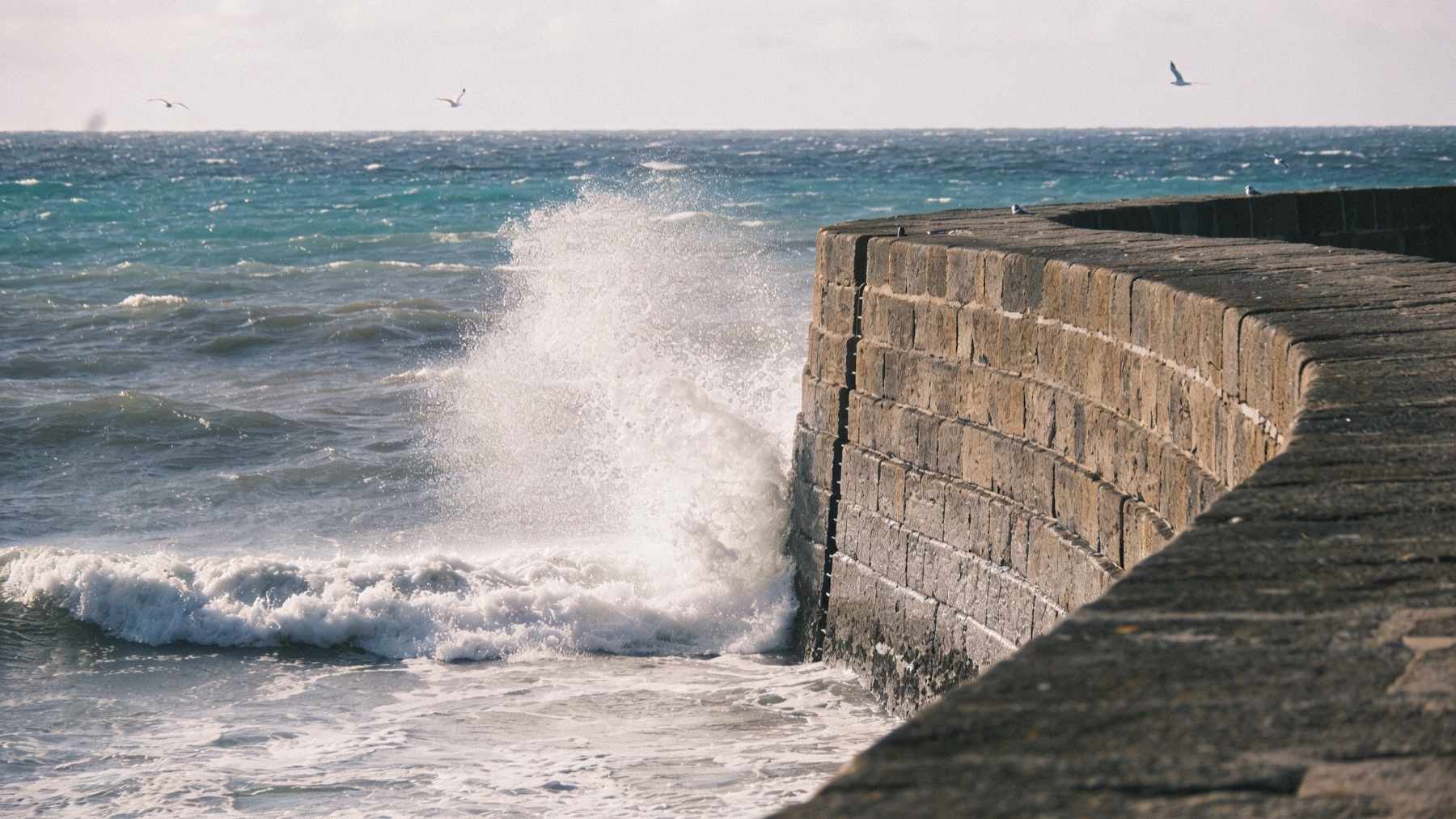
Wind blowing onto the beach builds chop fast and pushes you back towards the wall. How we read it, and when we stay on the stones.
Wind speed alone tells you very little. Fifteen kilometres an hour blowing off the land flattens the water in front of the beach; the same wind blowing onto it turns a calm bay into a washing machine in an hour.
Onshore, offshore, cross-shore
- Offshore (from the land): flat water near the shore, but it can carry you out. Stay close in.
- Onshore (from the sea): chop builds, getting out gets harder, and anything near a wall or rocks gets pushed into it.
- Cross-shore (along the beach): a drift. Swim into it first so the way back is easy.
How Saltglass reads it
Every spot in the app knows which way its beach faces. The forecast turns the wind’s bearing into one of those three words for your spot, and the verdict counts an onshore wind over about 15 km/h against a swim.
When we stay out
If the wind is onshore and rising, the swim window is short, and the entry is steep or next to a wall, we skip it and go for a walk instead. The sea will be there tomorrow.